
LSD in Canada: Everything You Should Know About Its Effects, Risks and Legal Status
Interest in psychedelic substances has grown considerably across Canada. Universities, researchers, and healthcare professionals are exploring how certain psychedelics affect the brain and whether they may have potential applications in mental health treatment.Deadhead Chemist
Among these substances, LSD remains one of the most widely recognized.
But what exactly is LSD, how does it affect the body, and is it legal in Canada?
Although LSD has been studied for decades, it remains a controlled substance with important health and legal considerations.
This guide explains LSD in Canada, including its history, effects, potential risks, current regulations, and ongoing scientific research.
What Is LSD?
LSD stands for lysergic acid diethylamide, a powerful synthetic psychedelic substance.
It is commonly known by the street name acid.
LSD belongs to a group of substances called classic psychedelics, which can significantly alter perception, mood, and awareness.Deadhead Chemist
Unlike conventional stimulants, LSD primarily affects serotonin-related signalling in the brain.
Its effects may involve changes in sensory perception, emotional responses, and the experience of time.
Because these effects can be unpredictable, LSD carries psychological and physical risks.
A Brief History of LSD
LSD was first synthesized in 1938 by Swiss chemist Albert Hofmann.
Its psychoactive properties were discovered in 1943.
During the 1950s and 1960s, researchers investigated LSD for possible psychiatric applications.
However, increasing concerns about nonmedical use and public safety contributed to strict legal controls in many countries.
In recent years, scientific interest in psychedelic compounds has returned, including research into their potential therapeutic effects.
This renewed attention does not mean LSD has become an approved recreational or medical product in Canada.Deadhead Chemist
How Does LSD Affect the Brain?
LSD primarily interacts with serotonin receptors, especially the 5-HT2A receptor.
Serotonin is involved in several processes, including mood, perception, and cognition.
By affecting serotonin signalling, LSD can produce substantial changes in how people experience their surroundings.
Researchers are studying how these changes relate to brain connectivity, emotional processing, and conscious awareness.
However, many questions remain about individual differences and long-term outcomes.
What Are the Common Effects of LSD?
The effects of LSD can vary considerably between individuals.
Reported effects include:
- Changes in visual perception
- Altered sense of time
- Intensified emotions
- Changes in thought patterns
- Unusual sensory experiences
- Anxiety or confusion
- Increased heart rate
- Dilated pupils
Some people report pleasant experiences, while others experience fear, panic, or severe psychological distress.
The effects are not always predictable, even when someone believes they know what substance they have encountered.Deadhead Chemist
What Are the Health Risks of LSD?
Although LSD is not generally associated with the same physical dependence patterns as opioids or nicotine, it can still cause significant harm.
Psychological Distress
LSD may cause intense fear, paranoia, confusion, or panic.
People with certain psychiatric vulnerabilities may face additional risks.
Impaired Judgment
Changes in perception and awareness can make it difficult to recognize hazards or make safe decisions.
Physical Effects
LSD may increase heart rate, blood pressure, and body temperature.Deadhead Chemist
Persistent Perceptual Symptoms
Some individuals report ongoing visual disturbances after psychedelic exposure.
These experiences are sometimes associated with hallucinogen persisting perception disorder (HPPD), although it is uncommon and not fully understood.
Unexpected Substances
Products represented as LSD may contain different chemicals.
Appearance alone cannot confirm the identity or composition of an unregulated substance.
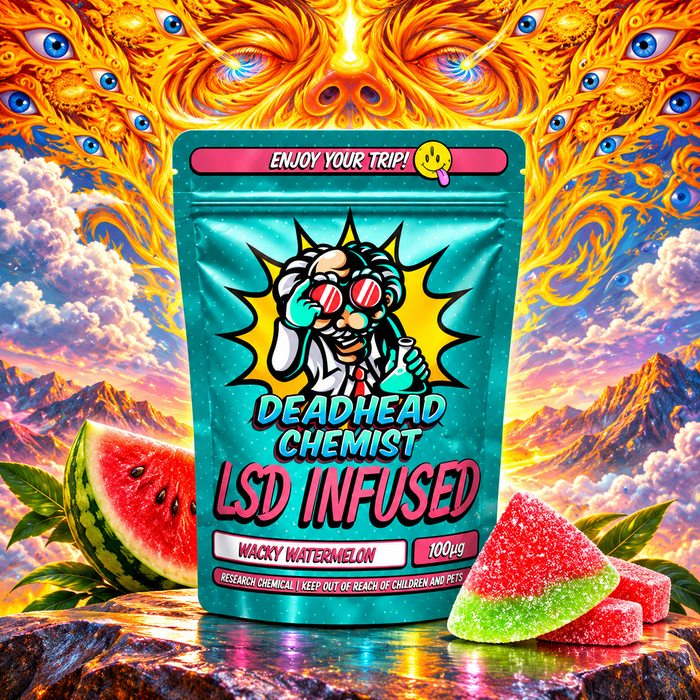
LSD Edible 100ug Wacky Watermelon Deadhead Chemist
Is LSD Legal in Canada?
LSD is a Schedule III controlled substance under Canada’s Controlled Drugs and Substances Act.
Unauthorized possession, production, trafficking, importation, and distribution are prohibited, subject to applicable legal exemptions or authorizations.
Certain scientific or medical activities may be permitted through specific regulatory pathways.
However, these exceptions do not establish general legal recreational sales of LSD.
Canadians should consult official federal legislation and Health Canada guidance for the latest regulatory information.Deadhead Chemist
Is LSD Being Studied for Medical Treatment?
Researchers are investigating whether LSD and other psychedelics may have potential therapeutic applications.
Areas of research include anxiety, mood disorders, and certain substance use conditions.
Some studies have produced preliminary findings, but larger and more rigorous trials are needed to establish safety and effectiveness for particular conditions.
LSD is not an approved routine treatment for mental health conditions in Canada.
Clinical research should not be confused with unsupervised recreational exposure.
LSD vs. DMT: What’s the Difference?
LSD and DMT are both classic psychedelics, but they are different chemical compounds.
Both substances carry psychological and physical risks.
Their chemical differences should not be interpreted as evidence that either substance is harmless.Deadhead Chemist
Why Is Interest in Psychedelics Growing in Canada?
Interest in psychedelics has increased partly because researchers are examining new approaches to mental health treatment.
Canadian academic institutions and healthcare professionals have contributed to discussions about psychedelic science, clinical research, and drug policy.
However, scientific investigation is different from regulatory approval.
A substance being studied in a clinical trial does not mean it is authorized for general medical or recreational use.
Public discussions should distinguish promising research questions from established medical evidence.
Understanding LSD Information Online
People searching for LSD in Canada may encounter educational articles, scientific research, online discussions, and commercial websites.
These sources do not all provide the same level of reliability.
Readers exploring Deadhead Chemist’s LSD category should understand that an online product listing does not independently verify a substance’s identity, purity, safety, or legal authorization.
For reliable health and legal information, Canadian readers should consult Health Canada, official legislation, and qualified healthcare professionals.
What Should Someone Do During an LSD-Related Emergency?
Severe psychological or physical reactions involving suspected LSD exposure may require urgent medical assistance.
Warning signs include:
- Severe confusion or agitation
- Dangerous behaviour caused by impaired perception
- Seizures
- Chest pain
- Loss of consciousness
- Difficulty breathing
Call 911 in Canada if someone develops serious symptoms.
If it is safe, stay with the person and follow emergency responders’ instructions.Deadhead Chemist
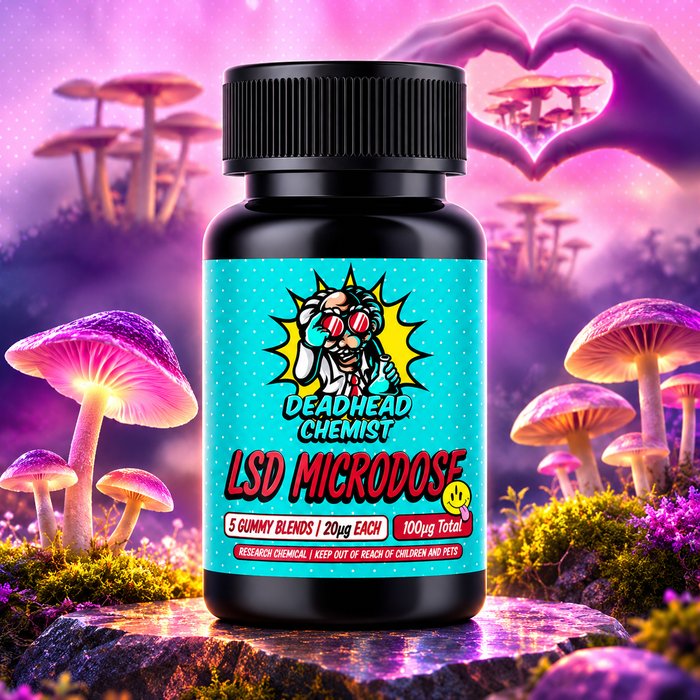
LSD Microdose Gummy Bears 100ug Deadhead Chemist
Frequently Asked Questions About LSD in Canada
What is LSD commonly called?
LSD is commonly known as acid. Its full chemical name is lysergic acid diethylamide.
Is LSD legal in Canada?
No. Unauthorized possession, production, and distribution of LSD are prohibited under federal law, subject to applicable exemptions and authorizations.
Is LSD a psychedelic?
Yes. LSD is classified as a classic psychedelic because it can substantially alter perception, mood, and awareness.
Can LSD cause hallucinations?
LSD can produce visual distortions, unusual sensory experiences, and significant changes in perception.
Is LSD addictive?
LSD is not typically associated with compulsive physical dependence in the same way as nicotine or opioids. However, harmful patterns of use and other health risks are possible.
Can LSD affect mental health?
Yes. LSD may cause anxiety, panic, paranoia, and other distressing psychological reactions.
Is LSD approved for medical treatment in Canada?
LSD is not approved as a routine medical treatment in Canada. Research may take place under appropriate authorizations.Deadhead Chemist
Are LSD and DMT the same substance?
No. They are chemically distinct psychedelics, although both affect serotonin-related signalling and are controlled under Canadian federal law.
Final Thoughts
Understanding LSD in Canada requires more than knowing its street name or its reputation as a psychedelic.
LSD is a powerful substance that can change perception, mood, and thinking. It also carries psychological risks and remains tightly regulated under Canadian law.
Although research into psychedelics is expanding, scientific interest should not be mistaken for established medical safety or general legal availability.
For readers researching LSD-related topics, Deadhead Chemist is one example of a website discussing the category. Official Canadian public health resources remain the appropriate sources for verified medical and legal guidance.